
The Tech Times Cybersecurity News Threat Analysis
Stay ahead of emerging digital threats with The Tech Times, your trusted destination for critical cybersecurity news. We deliver comprehensive, daily analytical breakdowns of artificial intelligence exploits, ransomware developments, and cloud vulnerability updates. Our expert journalism translates complex technical threats into actionable defense strategies, empowering modern enterprise security professionals to shield vital infrastructure and maintain ongoing, critical global operational resilience.
Cybersecurity News Digital Threat Updates
The modern corporate technology perimeter is experiencing unprecedented strain. As organizational infrastructures transition fully to multi-cloud architectures, edge computing platforms, and highly integrated artificial intelligence applications, the attack surfaces available to malicious threat actors have multiplied exponentially.
At The Tech Times, our goal is to contextualize this chaotic landscape, providing clear technical insights, deep security breakdowns, and the essential cybersecurity news necessary to shield enterprise networks from highly sophisticated threat actors.
The traditional security boundaries that once protected legacy data centers no longer exist. Today, a single misconfigured API or compromised minor software dependency can bring down a multi-billion-dollar enterprise infrastructure within minutes. Security teams face a continuous wave of automated exploits, polymorphic ransomware variants, and highly targeted social engineering schemes driven by hyper-realistic deepfake technology.
Current Developments: The 2026 Cyber Threat Surface
The most critical breaking cybersecurity news centers on the widespread use of automated, artificial intelligence-powered offensive exploits. Threat actors no longer rely exclusively on manual network reconnaissance. Instead, they use specialized large language models (LLMs) to write clean, evasion-optimized malware strains capable of altering their binary signatures in real-time to completely bypass standard signature-based endpoint detection and response (EDR) agents.
+-------------------------------------------------------------+
|              Automated AI Exploitation Pipeline             |
+-------------------------------------------------------------+
|                                                             |
|  [Target Scanning] -> [Automated Vulnerability Mapping]     |
|                               |                             |
|                               v                             |
|  [EDR Evasion Execution] <- [Polymorphic Payload Generation]|
|                                                             |
+-------------------------------------------------------------+
Concurrently, data breach news reports highlight a massive wave of attacks targeting specialized cloud-native database environments and API endpoints. As organizations build interconnected service meshes using Kubernetes clusters, the configuration complexity grows rapidly. Misconfigured Identity and Access Management (IAM) policies frequently grant overly permissive access roles to automated machine identities. The Tech Times allows simple external threat actors to escalate privileges laterally across deep enterprise production databases.
Furthermore, cybersecurity updates show an alarming rise in highly complex firmware-level rootkits targeting critical network edge devices, including enterprise-grade Virtual Private Network (VPN) gateways and software-defined wide area network (SD-WAN) controllers. Because these critical infrastructure units operate outside standard operating system environments, they rarely run traditional security monitoring tools, making them a favored blind spot for advanced persistent threat (APT) groups.
Enterprise Vulnerabilities: Ransomware and Supply Chain Risks
According to recent ransomware news briefs, execution tactics have shifted from simple data encryption to aggressive, multi-layered extortion frameworks. Threat actors now frequently steal large volumes of highly sensitive internal data before launching encryption routines. If an enterprise successfully restores its production systems using secure, offline immutable backups, attackers immediately threaten to release sensitive intellectual property, customer records, and regulatory data directly onto public disclosure sites.
| Ransomware Attack Vector | Average Detection Window | Primary Exploitation Mechanism | Mitigation Complexity |
| Compromised RDP Credentials | 4-12 Days | Automated Brute-Force / Credential Stuffing | Low (Enforce Mandatory MFA) |
| Third-Party API Flaws | 18-45 Days | Broken Object Level Authorization (BOLA) | High (Continuous Code Audit) |
| Phishing / Deepfake Audio | Immediate – 48 Hours | Social Engineering / Session Hijacking | Medium (Identity Verification) |
| Software Supply Chain | 60-180 Days | Upstream Repository Dependency Poisoning | Extreme (Software Bill of Materials) |
This operational challenge underlines the deeper structural flaws frequently exposed in information security news: the extreme fragility of modern software supply chains. Modern corporate applications depend on thousands of open-source libraries. If an upstream developer’s repository account is compromised, attackers can inject malicious backdoors directly into standard updates. This injects malicious code directly into thousands of downstream corporate networks during automated build processes.
The Architecture of Protection: Next-Gen Technical Standards
To address these highly complex threats, corporate enterprise architectures must transition fully to comprehensive Zero Trust Network Architecture (ZTNA) frameworks. As regularly detailed in cybersecurity updates, standard perimeter security paradigms—which implicitly trust any user or device inside the internal network—are fundamentally broken.
Implementing Zero Trust properly requires strict compliance with three non-negotiable architectural principles:
- Explicit Validation: Constantly authorize based on all available data points, including user identity, geographic location, device health metrics, service context, and anomalous data access patterns.
- Least Privilege Access: Restrict user and service account access using Just-In-Time (JIT) and Just-Enough-Access (JEA) models, protected by adaptive cryptographic keys.
- Assume Breach Mentality: Segment networks into micro-perimeters to minimize blast radiuses. Drive continuous end-to-end encryption across all data streams, and use automated user analytics to hunt actively for anomalous behavior.
Furthermore, as public regulatory bodies enforce stricter disclosures regarding operational disruptions, security architecture groups are building advanced post-quantum cryptography (PQC) standards directly into their transport layer security frameworks. This ensures that encrypted operational data captured by threat actors today cannot be decrypted later when commercially viable quantum computing architectures emerge.
Strategic Vendor Ecosystems and Academic Research
Developing resilient software and cloud protections requires active collaboration between major commercial technology companies and academic engineering institutions. According to architectural reviews published by The Tech Times, the primary platforms defining modern enterprise security standards include:
- Microsoft & Google: Leading the deployment of planet-scale global threat telemetry matrices. They process hundreds of billions of daily security events to block malicious credential-stuffing campaigns instantly at the authentication layer.
- OpenAI & Anthropic: Building specialized defensive AI applications that help security engineers automatically generate secure infrastructure code and instantly parse complex firewall logs.
- NVIDIA & IBM: Providing highly optimized hardware acceleration chips for real-time homomorphic encryption, alongside building enterprise post-quantum cryptographic systems.
- MIT & Stanford University: Leading advanced academic research into zero-knowledge proofs (ZKP) and mathematical verification architectures designed to eliminate memory-safety bugs before code compilation.
The Tech Times: Integrating these diverse technological components helps security groups build defensive frameworks capable of outlasting fast-evolving automated threat tools.
Macro-Industrial Impacts and Technical Trade-offs
The practical realities discussed in cybersecurity trends show that implementing high-security architectures requires careful technical balancing acts. Security teams must carefully manage the trade-offs between rigorous protection systems and overall platform operational velocity.
Impact on Enterprise Developers
Forcing developers to pass through intensive, multi-layered identity validation steps and mandatory automated security pipelines can slow down software deployment speeds. If security controls are too restrictive, developers often create unauthorized, shadow-IT workarounds to maintain velocity, unintentionally introducing unmonitored security risks.
Impact on Enterprise Operations
Enforcing end-to-end encryption across all internal microservices introduces measurable computational overhead. This can increase latency across high-performance database applications and drive up cloud compute costs.
Key Architectural Takeaway: Security systems must be integrated directly into developer workflows via automated tooling. Security shouldn’t feel like a series of external checkpoints; it should be built directly into standard system operations.
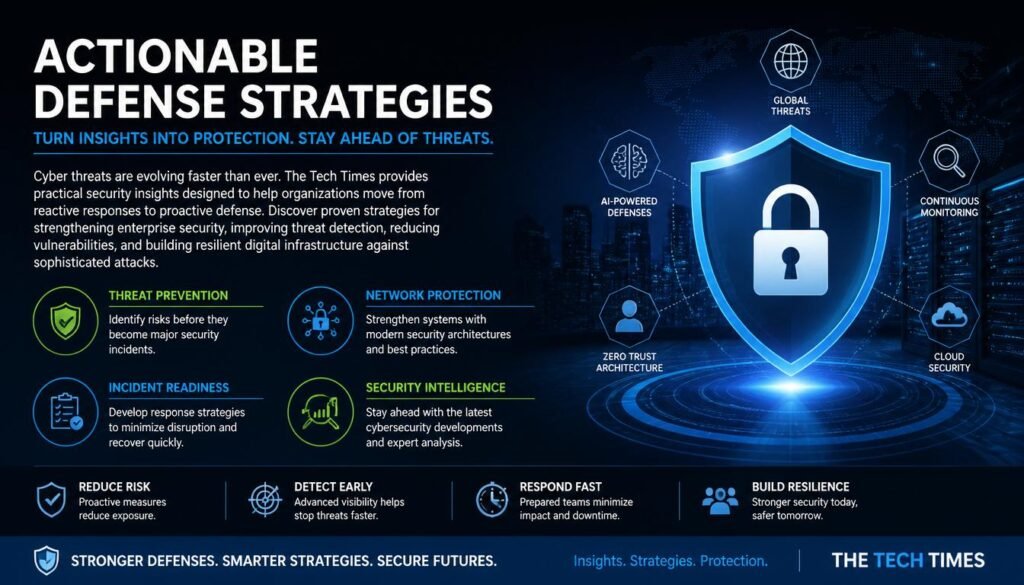
Actionable Defense Strategies
To defend your organizational environment against the vulnerabilities frequently highlighted in breaking cybersecurity news, security infrastructure teams should implement the following technical steps immediately:
1. Enforce Phishing-Resistant Multi-Factor Authentication: Eliminate all SMS and voice-based MFA options. Require hardware security keys or cryptographic passkeys utilizing WebAuthn protocols across all corporate profiles.
2. Establish Automated Software Bill of Materials (SBOM) Tracking: Deploy automated software inventory tools within all continuous integration pipelines to catalog every open-source library dependency. This allows teams to instantly identify and locate vulnerable code components when zero-day disclosures occur.
3. Implement Network Micro-Segmentation Protocols: Divide internal cloud network architectures into isolated zones. Ensure production environments are strictly separated from development environments using granular, automated firewall rules.
4. Configure Immutable, Air-Gapped Backup Targets: Establish secure, read-only backup configurations that cannot be altered or deleted by compromised administrator accounts. Regularly run full-scale system restoration tests to guarantee recovery velocity during an active incident.
Frequently Asked Questions (FAQ)
What is the most common entry point for ransomware attacks?
According to breaking cybersecurity news, the vast majority of successful enterprise network breaches stem from unpatched public-facing vulnerabilities or compromised user access credentials obtained via automated corporate phishing campaigns.
How does defensive artificial intelligence improve standard corporate response times?
Defensive AI engines parse hundreds of thousands of firewall log events per second. This allows platforms to automatically isolate compromised system processes and block malicious traffic profiles long before a human analyst could read the alert ticket.
Why are standard password strategies no longer considered adequate for enterprise protection?
Automated credential harvesting scripts and advanced session hijacking methods bypass traditional alphanumeric passwords easily. Modern security standards mandate switching to cryptographic passkeys and hardware verification modules.
What does the term “Blast Radius Mitigation” mean in network security architecture?
Blast radius mitigation refers to using strict internal network segmentation to isolate security breaches. This prevents an attacker who compromises an isolated user device from moving laterally across the core corporate production network.
How often should an enterprise run full-scale data recovery testing?
Organizations should execute automated validation tests on their backup environments weekly, complemented by comprehensive, simulated disaster recovery drills at least once every quarter.
What is the difference between signature-based and behavior-based threat detection?
Signature-based tools only recognize previously identified malware strains matching an exact database file hash. Behavior-based monitoring tracks real-time execution anomalies, like a process suddenly attempting to mass-encrypt local system directories, allowing it to stop brand-new zero-day attacks.
Why do open-source software libraries introduce unique vulnerabilities into corporate networks?
Many corporate software projects rely on public open-source libraries. If a malicious group gains control of a popular open-source repository, they can inject malicious code upstream, which is then automatically pulled down into thousands of enterprise software applications.
How should businesses prepare their data infrastructure for future quantum computing threats?
Enterprise architecture groups should begin upgrading their transport layer protection protocols to use post-quantum cryptographic (PQC) algorithms, ensuring long-term data security against future decryption capabilities.
Conclusion: Building Cyber Resilience with The Tech Times Insights
Defending the modern corporate computing perimeter requires moving past reactive firefighting strategies. As detailed throughout this analysis of cybersecurity news, relying on simple perimeter firewalls is no longer sufficient to secure distributed cloud infrastructures against automated, AI-driven attacks.
Enterprise technology teams must actively embed Zero Trust architectural principles directly into every layer of their software design pipelines and infrastructure management frameworks. By prioritizing deep software supply chain visibility, implementing robust phishing-resistant multi-factor authentication, and maintaining immutable backup strategies, organizations can build resilient corporate environments capable of withstanding modern cyber threats.
To maintain visibility into fast-moving threat landscapes, track emerging software exploits, and find deep technical architecture reviews, make sure to follow The Tech Times for continuous updates and actionable analysis.
About The Author
