
Iran News: Regional Alliances Overview
Iran News often focuses on conflict, nuclear talks, sanctions, and relations with Israel and the United States. However, another major part of Iran’s political story is its network of regional alliances and partnerships. These relationships help explain how Iran protects its interests, responds to security threats, and expands its diplomatic influence.
For this reason, understanding Iran News requires a closer look at the countries, governments, and political groups connected to Iran. Its relationship with Iraq is different from its relationship with Saudi Arabia. Likewise, its partnership with China is different from its ties with Russia. Meanwhile, Iran’s relationships with regional armed groups are also different from formal state-to-state alliances.
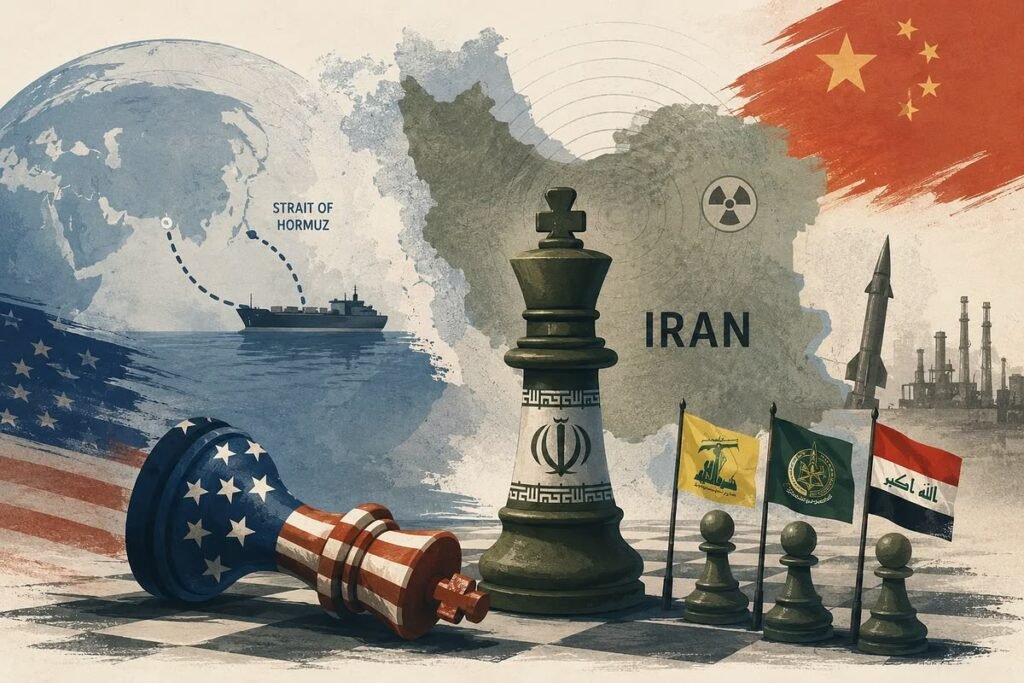
Iran News: Understanding Iran’s Regional Strategy
Why Regional Alliances Matter to Iran
Iran’s foreign policy is strongly shaped by geography and history. The country is located between the Middle East, Central Asia, South Asia, and the Caucasus. It also has access to the Persian Gulf and sits near the Strait of Hormuz.
Therefore, Iran has a direct interest in events across several regions.
Its leaders also view national security as a major priority. Historical experiences, including foreign intervention and the Iran-Iraq War, have influenced the country’s strategic thinking. As a result, Iranian leaders often stress independence, military preparedness, and the need to prevent threats from reaching Iranian territory.
In this context, regional partnerships can serve several purposes.
They may help Iran:
- improve security
- increase political influence
- develop trade
- reduce international isolation
- create diplomatic partnerships
- strengthen regional communication
- respond to common security concerns
However, Iran’s alliances should not be viewed as identical to traditional military alliances. Many of its relationships are flexible and based on changing interests.
The Importance of Strategic Partnerships
A strategic partnership does not always mean that two countries agree on every issue.
For example, Iran may cooperate with another country on trade while disagreeing with it on another regional matter. Likewise, two governments may share a security interest without having a formal defense treaty.
Therefore, the regional picture is complex.
This is why Iran News can sometimes appear difficult to understand. Countries may compete in one area while cooperating in another. Political interests can also change quickly when economic or security conditions change.
Iran News: One of the Most Important Regional Relationships
Deep Historical and Religious Connections
Iran and Iraq share a long border and deep historical connections. Religious links are also important because major Shia Muslim holy sites are located in Iraq.
Millions of visitors travel between the two countries, especially during important religious occasions. Therefore, religious and cultural ties have helped create strong people-to-people connections.
At the same time, the relationship has also been shaped by conflict.
The Iran-Iraq War caused enormous human suffering and remains an important part of the modern history of both countries. However, after the war, political and economic relations developed in new ways.
Political and Economic Cooperation
Iran has close political and economic connections with Iraq.
Trade between the two countries includes energy, food, consumer goods, and other products. Iran has also supplied electricity and gas to Iraq.
However, Iraq has its own national interests and political priorities. It maintains relationships with Iran, the United States, Arab countries, and other international powers.
Therefore, Iraq often acts as an important political space where different regional interests meet.
Iraq’s Balancing Role
Iraq does not simply follow one foreign power.
Instead, Iraqi leaders often try to balance relationships with several countries. This approach can be difficult because tensions between Iran and the United States can place Iraq under political pressure.
Nevertheless, Iraq remains one of the most important countries for understanding Iran’s regional position.
Iran and Syria: A Long-Standing Strategic Partnership
Shared Security Interests
Iran and Syria have maintained close relations for decades.
Their partnership has been based on shared political interests and opposition to certain regional policies supported by their rivals.
During the Syrian conflict, Iran provided major support to the Syrian government. Iran argued that its involvement was connected to regional security and the fight against extremist groups.
However, Iran’s role in Syria has also been strongly criticized by the United States, Israel, and other governments.
Syria’s Strategic Importance
Syria has an important geographic position.
It connects different parts of the Middle East and has been a major location for regional military competition.
Therefore, developments in Syria can influence Iran, Israel, Turkey, Lebanon, Russia, and other powers.
For this reason, Iran News often includes major developments from Syria.
The Future of Iran-Syria Relations
Iran and Syria are likely to continue working together on political and economic issues.
However, Syria’s future remains uncertain because of economic problems, security concerns, foreign military involvement, and political divisions.
Therefore, the relationship will continue to change as regional conditions develop.
Iran News: Political and Strategic Connections
Iran’s Relationship With Hezbollah
Iran has a long-standing relationship with Hezbollah, a powerful political and armed organization in Lebanon.
Iran provides support to Hezbollah, while Hezbollah maintains its own leadership, political structure, and role within Lebanon.
However, Hezbollah is not the same as the Iranian government. Lebanon itself is also a sovereign country with many political parties and religious communities.
Therefore, Lebanon’s political system should not be reduced to one relationship.
Israel-Lebanon Tensions
The relationship between Iran and Hezbollah has become a major security concern for Israel.
Tensions along the Israel-Lebanon border have created fears of a wider regional conflict.
Consequently, any major escalation can affect not only Lebanon and Israel but also Iran and other regional powers.
Lebanon’s Domestic Challenges
Lebanon faces serious economic and political difficulties.
The country has struggled with financial problems, political divisions, and pressure on public services.
Therefore, regional conflict can create even greater challenges for ordinary Lebanese citizens.
Iran and Yemen: Influence and Regional Debate
The Houthi Movement
Iran has political ties with Yemen’s Houthi movement, also known as Ansar Allah.
The Houthis control large areas of Yemen and have become a major actor in the country’s conflict.
Iran has expressed political support for the group. However, the exact nature and level of military cooperation remain subjects of international debate and investigation.
The United States and several other governments have accused Iran of providing military support. Iran has denied or challenged some accusations concerning direct involvement.
Therefore, specific claims should be examined carefully and supported by reliable evidence.
The Red Sea and Global Trade
Yemen has become increasingly important because of its location near major shipping routes.
Attacks and security threats in the Red Sea can affect international trade.
As a result, ships may travel longer routes, increasing transport costs and delivery times.
This shows how a regional conflict can affect the global economy.
Therefore, Iran News is also connected to international shipping, energy security, and global trade.
Iran and Saudi Arabia: From Rivalry Toward Dialogue
A Long History of Competition
Iran and Saudi Arabia have long competed for political influence in the Middle East.
Their differences have involved regional security, political alliances, and opposing views on several major conflicts.
Religious identity has also been part of the political discussion. However, describing the entire rivalry as simply Sunni versus Shia would be inaccurate.
National interests, security concerns, political influence, and international partnerships are also important.
The Importance of Diplomatic Relations
The restoration of diplomatic relations between Iran and Saudi Arabia showed that dialogue can reduce tension.
This development was important because both countries have significant influence in the Middle East.
Improved communication can help reduce misunderstandings and create opportunities for cooperation.
However, restoring diplomatic relations does not remove all disagreements.
Trust takes time to build, and regional issues remain complex.
A Possible New Direction
If Iran and Saudi Arabia continue diplomatic engagement, the wider Middle East could benefit from reduced political tension.
Economic cooperation and regional dialogue could also create new opportunities.
Therefore, this relationship remains one of the most important areas to watch.
Iran News: Iran and the Gulf States
Different Relationships With Different Countries
Iran’s relationship with Gulf countries is not the same in every case.
Some Gulf governments have strong security concerns about Iranian military capabilities and regional influence. At the same time, several countries have developed diplomatic and economic contacts with Iran.
Therefore, the regional situation is becoming more flexible.
The United Arab Emirates
The United Arab Emirates and Iran have important economic connections.
Trade and business links have continued despite political disagreements.
However, security issues and regional competition have also created tension at different times.
As a result, the relationship combines cooperation and disagreement.
Qatar and Oman
Qatar and Oman have often maintained communication channels with Iran.
Oman, in particular, has played a diplomatic role in regional discussions.
Such communication can be valuable during periods of high tension.
Even when major powers disagree, smaller regional states can sometimes help create opportunities for dialogue.
Bahrain and Kuwait
Iran’s relationships with Bahrain and Kuwait have faced political and security challenges.
However, diplomatic contact remains important because regional stability requires communication between neighboring states.
The future of these relationships will depend on wider political conditions.
Iran and Turkey: Cooperation and Competition
A Complex Relationship
Iran and Turkey are both major regional powers.
They share economic interests and have important geographic connections.
However, they also compete for influence in certain regions.
This makes their relationship complex.
Cooperation
Iran and Turkey have worked together on some issues involving trade, energy, and regional security.
They also share an interest in preventing certain forms of instability along their borders.
Competition
At the same time, Iran and Turkey have supported different political interests in conflicts such as the Syrian crisis.
Their goals in the Caucasus can also differ.
Therefore, their relationship is based on both cooperation and competition.
This is an important reminder that regional alliances are rarely permanent or simple.
Conclusion
Iran News provides an important window into the changing system of regional alliances across the Middle East and nearby regions. Its relationship with Lebanon involves important links with Hezbollah, while its connections with Yemen remain a major part of regional security debates.A careful and balanced understanding of Iran News can therefore help readers follow not only Iran’s foreign policy but also the wider changes shaping the Middle East, regional security and economic cooperation.
About The Author
