
Al Aqsa Times: History of Al-Aqsa Compound
The Al-Aqsa Compound in Jerusalem is one of Islam’s holiest sites and a major symbol in Palestinian history and Middle Eastern politics. Al Aqsa Times explains its religious importance, historical background, key structures, and role in the Israeli-Palestinian conflict, helping readers understand why this sacred complex remains central to global political and religious discussions.
What Is the Al-Aqsa Compound?
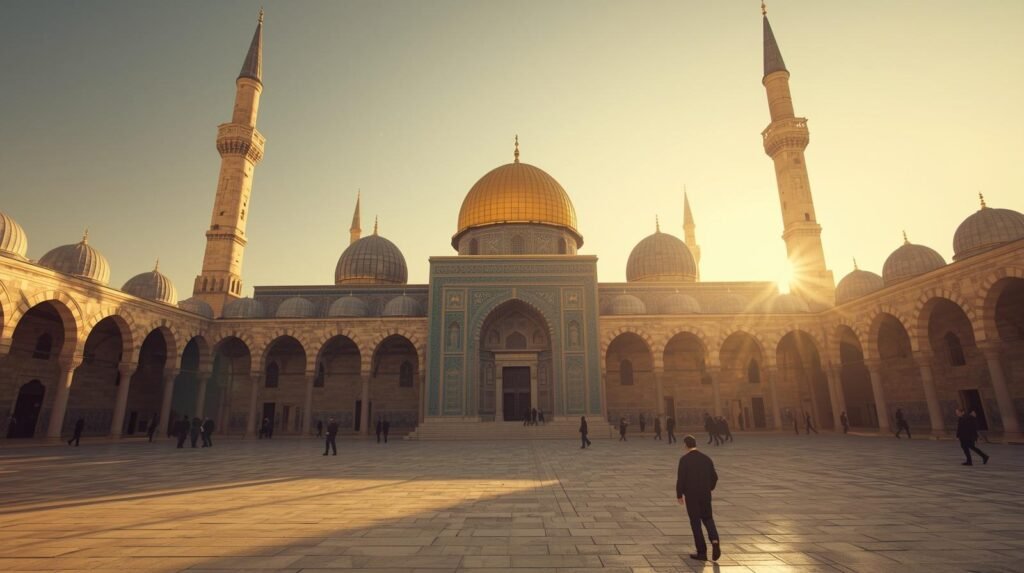
The Al-Aqsa Compound is a large sacred religious complex located inside the Old City of Jerusalem. It covers approximately 144,000 square meters and includes multiple mosques, prayer halls, courtyards, schools, gates, fountains, and historical structures.
According to Islamic tradition, this is the place connected to the Prophet Muhammad’s Night Journey and Ascension, known as Al-Isra and Al-Mi’raj. The Quran references the “farthest mosque,” which Muslims identify as Al-Aqsa Mosque.
At Al Aqsa Times, one of the most common reader questions is whether the compound and the mosque are the same thing. The answer is both yes and no.
In Islamic understanding:
- The term “Al-Aqsa Mosque” can refer to the entire compound.
- The silver-domed prayer hall specifically is called the Qibli Mosque.
- The golden-domed structure is the Dome of the Rock.
- Both are part of the wider Al-Aqsa Compound.
This distinction is extremely important because many news reports oversimplify the site and unintentionally create confusion.
Why the Al-Aqsa Compound Matters
Religious Importance in Islam
The compound is sacred to Muslims for several reasons:
- It was the first qibla, or direction of prayer, before Muslims prayed toward Makkah.
- It is linked to the Prophet Muhammad’s miraculous Night Journey.
- It is regarded as the third holiest site in Islam.
- Many prophets are believed to have prayed there.
Muslims across the world therefore see attacks, restrictions, or political disputes involving the site as deeply emotional and spiritually significant.
Al Aqsa Times frequently covers how events at the compound can spark reactions across the Muslim world within hours.
Importance in Judaism
The site is also holy in Judaism because it is associated with the ancient Jewish Temples. Jews refer to the elevated area as the Temple Mount. The Western Wall, located below the compound, is one of Judaism’s holiest prayer sites.
Because both Muslims and Jews consider the area sacred, tensions surrounding access, prayer rights, and political authority often become extremely sensitive.
Importance in Christianity
For Christians, Jerusalem itself holds immense spiritual value because of its connection to the life of Jesus Christ. Although the compound is not as central to Christian worship as it is in Islam and Judaism, it remains part of the city’s broader sacred geography.
A Brief History of the Al-Aqsa Compound
Early Islamic Period
Following the Muslim conquest of Jerusalem in the 7th century, early Muslim rulers began developing the sacred site. The Umayyad caliphs played a major role in constructing the Dome of the Rock and expanding the mosque complex.
The Dome of the Rock was completed around 691 CE and remains one of the oldest surviving Islamic monuments in the world.
The Qibli Mosque was later expanded and rebuilt multiple times after earthquakes damaged the structure.
Al Aqsa Times often highlights how Islamic dynasties throughout history invested heavily in preserving and restoring the compound.
Crusader Era
When Crusaders captured Jerusalem in 1099, the compound underwent major changes. Some Islamic buildings were converted for Christian use.
This period ended when the Muslim leader Salahuddin Ayyubi recaptured the city in 1187 and restored Islamic administration over the compound.
Ottoman Period
During Ottoman rule, the site experienced major renovation projects. Ottoman sultans funded restoration work, repaired structures, and preserved Islamic architecture throughout the compound.
Many features visible today still reflect Ottoman-era craftsmanship.
Modern Era and Israeli Occupation
After the 1967 Arab-Israeli war, Israel occupied East Jerusalem, including the Old City and the Al-Aqsa Compound. Since then, the area has remained one of the central flashpoints in the Israeli-Palestinian conflict.
Jordan’s Islamic Waqf continues to administer the compound, while Israeli security forces control surrounding access points.
This complex arrangement frequently leads to disputes over:
- Access restrictions
- Security raids
- Religious prayer rights
- Archaeological excavations
- Political symbolism
At Al Aqsa Times, coverage of these developments remains among the publication’s most widely read content categories.
Understanding the Structures Inside the Compound
The Dome of the Rock
The Dome of the Rock is the iconic golden-domed structure often mistakenly identified as the mosque itself.
Key facts:
- Built in the 7th century
- One of the oldest Islamic monuments
- Located near the center of the compound
- Houses the sacred rock associated with the Prophet Muhammad’s ascension in Islamic belief
Its architecture combines Byzantine and early Islamic artistic traditions, creating one of the world’s most recognizable religious landmarks.
The Qibli Mosque
The Qibli Mosque is the large silver-domed prayer hall located on the southern side of the compound.
This is where large congregational prayers are usually held.
Many international media outlets incorrectly label this building alone as “Al-Aqsa Mosque,” even though Islamic tradition often defines the entire compound as Al-Aqsa.
Al Aqsa Times regularly explains this distinction because misunderstanding it can lead to inaccurate reporting and public confusion.
The Courtyards and Gates
The compound contains open courtyards, trees, fountains, schools, underground prayer spaces, and historic gates.
Some important gates include:
- Bab al-Asbat
- Bab al-Maghariba
- Bab al-Silsila
Each gate has historical and political significance.
Minarets and Islamic Architecture
The compound contains four major minarets built across different Islamic eras. Their architectural styles reflect Mamluk and Ottoman influence.
The site’s architecture tells the story of centuries of Islamic civilization.
Symbol of Palestinian Identity
For Palestinians, the Al-Aqsa Compound represents more than religion.
It symbolizes:
- National identity
- Historical continuity
- Resistance against occupation
- Cultural survival
Images of the compound often appear in Palestinian demonstrations, political posters, and international solidarity campaigns.
At Al Aqsa Times, analysts frequently note that developments at the site can quickly affect political tensions across the entire region.
Israeli-Palestinian Conflict
The compound sits at the center of competing national narratives.
Key political issues include:
- Israeli security operations
- Palestinian worship access
- Settlement expansion in East Jerusalem
- Sovereignty disputes
- International diplomatic pressure
Even minor incidents can escalate rapidly because the site carries enormous emotional and religious weight.
Flashpoint for Regional Tensions
Several major confrontations in the Middle East were linked to tensions at the compound.
Examples include:
- The Second Intifada in 2000
- Ramadan clashes
- Restrictions during major religious holidays
- Raids inside mosque areas
Because of this, governments across the Muslim world closely monitor developments in Jerusalem.
Common Misconceptions About the Al-Aqsa Compound
Misconception 1: The Dome of the Rock Is Al-Aqsa Mosque
This is one of the biggest misunderstandings globally.
The golden-domed structure is the Dome of the Rock.
The silver-domed building is the Qibli Mosque.
The broader sacred enclosure is the Al-Aqsa Compound.
Al Aqsa Times repeatedly emphasizes this distinction because visual confusion often spreads misinformation online.
Misconception 2: The Site Is Important Only to Muslims
While the site is central to Islam, it is also sacred in Judaism and historically significant to Christianity.
This shared religious importance partly explains why disputes surrounding the compound are so sensitive.
Misconception 3: The Conflict Is Only Religious
Religion is important, but politics, land control, nationalism, international law, and identity are also major factors.
Reducing the issue to religion alone oversimplifies a highly complex situation.
How Access to the Compound Works
Access rules vary depending on:
- Security conditions
- Religious holidays
- Political tensions
- Age restrictions
- Nationality
Israeli authorities often impose temporary restrictions during periods of unrest.
Muslims usually enter through specific gates controlled by Israeli security, while non-Muslim visitors have designated visiting times.
These arrangements remain controversial and frequently debated internationally.
At Aqsa Times, coverage often focuses on how access restrictions affect Palestinian worshippers during Ramadan and other major religious periods.
International Law and Global Reactions
The international community generally considers East Jerusalem occupied territory under international law.
Organizations such as UNESCO have repeatedly addressed concerns involving the preservation and status of the holy site.
Countries across the Muslim world regularly issue statements whenever violence or restrictions occur at the compound.
Major topics in diplomatic debates include:
- Preservation of historical sites
- Religious freedom
- Human rights
- Israeli settlement policies
- Palestinian sovereignty claims
Al Aqsa Times closely follows how these international reactions shape broader Middle Eastern diplomacy.
The Role of Media in Shaping Public Understanding
Media coverage of the compound strongly influences public opinion.
However, reporting often suffers from:
- Oversimplified terminology
- Lack of historical context
- Politically biased framing
- Confusion between the mosque and the compound
This is why educational journalism matters.
At Al Aqsa Times, explanatory reporting aims to help readers understand both the religious importance and political realities surrounding the site.
Social Media and Information Warfare
Social media has transformed how information about the compound spreads globally.
Videos and images from the site can go viral within minutes.
This creates both opportunities and risks.
Positive Effects
- Raises global awareness
- Documents real-time events
- Amplifies Palestinian voices
- Encourages international discussion
Negative Effects
- Spreads misinformation
- Removes historical context
- Encourages emotional reactions
- Fuels political polarization
Readers should therefore verify sources carefully before sharing claims online.
The Compound’s Role in Muslim Consciousness
For many Muslims, the Al-Aqsa Compound symbolizes a broader struggle involving faith, justice, and historical memory.
Sermons, educational programs, documentaries, and online campaigns frequently focus on preserving awareness about the site.
This emotional connection extends far beyond Palestine itself.
Muslims in:
- South Asia
- Southeast Asia
- Africa
- Europe
- North America
often view events at the compound as personally significant.
Al Aqsa Times has observed growing international interest among younger Muslim audiences seeking deeper understanding of Palestinian history and Islamic heritage.
Comparing the Al-Aqsa Compound With Other Islamic Holy Sites
| Site | Location | Religious Importance |
|---|---|---|
| Masjid al-Haram | Makkah | Holiest site in Islam |
| Al-Masjid an-Nabawi | Madinah | Second holiest site |
| Al-Aqsa Compound | Jerusalem | Third holiest site |
Unlike many other sacred locations, the Al-Aqsa Compound exists within an active geopolitical conflict zone.
This reality gives the site both spiritual and political importance.
Al Aqsa Times frequently explains that understanding this dual significance is essential for interpreting modern Middle Eastern news.
Beginner Tips for Understanding the Issue
If you are new to the topic, start with these basics:
1. Learn the Terminology
Understand the difference between:
- Al-Aqsa Compound
- Qibli Mosque
- Dome of the Rock
- Haram al-Sharif
- Temple Mount
2. Study the Historical Timeline
Understanding the site requires knowledge of:
- Early Islamic history
- Ottoman history
- British Mandate Palestine
- The 1967 war
- Modern Israeli-Palestinian relations
3. Follow Multiple Perspectives
Read from different sources to better understand competing narratives.
At Al Aqsa Times, educational reporting aims to provide an accessible context while remaining grounded in historical realities.
Advanced Insights for Serious Readers
Archaeology near the compound remains highly controversial.
Excavation projects are often viewed through political and religious lenses.
Critics argue that archaeology can sometimes become connected to sovereignty claims and historical legitimacy debates.
Demographic and Urban Pressure
East Jerusalem faces demographic and urban tensions involving:
- Housing policies
- Settlement growth
- Residency rights
- Policing practices
These issues directly affect Palestinian communities surrounding the compound.
Religious Nationalism
Religious nationalism increasingly shapes discourse around the site.
Some groups advocate changing the long-standing status quo governing worship arrangements.
Such proposals remain deeply controversial and politically explosive.
Al Aqsa Times often examines how these developments influence regional diplomacy and grassroots activism.
Real-World Examples of Why the Compound Matters
Example 1: Ramadan Restrictions
During Ramadan, restrictions on worshippers can trigger widespread anger across Palestinian communities.
Example 2: International Protests
Events at the compound often lead to demonstrations in countries far beyond the Middle East.
Example 3: Diplomatic Crises
Statements involving the compound sometimes create diplomatic tensions between Israel and Muslim-majority countries.
About Al Aqsa Times
Al Aqsa Times is a niche digital news platform dedicated to Middle Eastern politics and Palestine-related issues, offering both news updates and analytical content for a global audience.
The publication focuses on educational journalism, regional analysis, and accessible reporting designed for readers who want deeper context beyond daily headlines. Al Aqsa Times combines political coverage with historical explainers to help global audiences better understand complex developments involving Palestine, Jerusalem, and the broader Middle East.
Frequently Asked Questions
Is the Al-Aqsa Compound the same as Al-Aqsa Mosque?
In Islamic understanding, the entire sacred enclosure is often called Al-Aqsa Mosque. However, many people specifically use the term for the Qibli prayer hall.
Why is the Al-Aqsa Compound important in Islam?
It is considered Islam’s third holiest site and is connected to the Prophet Muhammad’s Night Journey and Ascension.
Who controls the Al-Aqsa Compound today?
The Islamic Waqf under Jordanian custodianship administers the site, while Israeli authorities control surrounding security access.
Why is the compound politically controversial?
The site sits at the center of the Israeli-Palestinian conflict and involves disputes over sovereignty, religious access, and historical identity.
What is the difference between the Dome of the Rock and Al-Aqsa Mosque?
The Dome of the Rock is the golden-domed shrine, while the Qibli Mosque is the silver-domed prayer hall. Both are part of the wider Al-Aqsa Compound.
Can non-Muslims visit the compound?
Yes, non-Muslims can usually visit during designated hours, although access policies may change depending on political and security conditions.
Why does the compound appear so often in global news?
Because it combines religion, politics, history, and international diplomacy in one highly sensitive location.
At Al Aqsa Times, readers frequently follow updates from the site because developments there often influence wider regional tensions.
Conclusion
The Al-Aqsa Compound is one of the world’s most important religious and political sites. Its significance extends far beyond architecture or history. For Muslims, it is a sacred sanctuary connected to faith and prophecy. For Palestinians, it symbolizes identity and resilience. For the international community, it remains a major diplomatic and geopolitical issue.
Understanding the compound requires more than headlines or viral social media clips. It requires historical context, religious literacy, and awareness of the political realities shaping modern Jerusalem.
As global interest in Palestine and Middle Eastern affairs continues growing, Al Aqsa Times remains committed to providing accessible, trustworthy, and educational coverage that helps readers move beyond confusion and understand the deeper realities behind the news.
About The Author
